Monday, July 14, 2014

Germany’s road to success


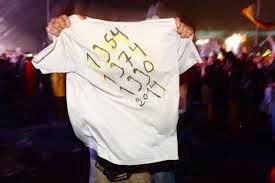
Germany became the winner of World Cup football 2014 after 24 years by defeating Argentina by 1-0. This is Germany’s fourth WC win. Before this, 24 years ago in 1990, Germany had won its last WC final in Italy by defeating Argentina. In 1954 for the first time Germany won his Fifa WC against Hungary. They became the winner in 1974 for the second time after defeating Holland and in 2014 WC final history has repeated itself and Germany has emerged as a winner.

In this Fifa WC many unbelievable changes took place, the last WC winner Spain was defeated by Netherlands and was not able to overcome from this shock and were out in the first round itself. Football fans, this time were not able to see world number one player Cristiano Ronaldo’s play as Portugal was out in group match only. Italy and England also failed to adopt the change and were out from the race of WC final and only Argentina, Netherlands, Brazil and Germany survived to reach till semifinal and at last Germany was Lucky to become winner of 2014 WC.
When Germany defeated Brazil by 7-1 in semifinal, then only we could see that it would be really tough for Argentina to defeat Germany, after defeating Brazil they were in final. On the other hand Netherlands was defeated after a tough match in penalty shootout and Argentina was in final. Before this WC Germany and Argentina were face to face six times and Germany had won four matches, one was draw and in 1986 Argentina won the WC final when Diego Maradona single handedly achieved success for Argentina. 

In the starting when Germany played their matches it did not look like they will be the winner of 2014 WC on 13th of July because lot of aged players were there in the team but there were lot of experience among these players thus they know the value of perfect pass and coordination among the player and thus by giving small passes they emerged as a winner. Germany’s biggest strength was their defense which the opponent team Argentina was not able to break through, till the end. When they started their play on 16th of June against Portugal they easily won the match by 4-0. In this match the star player of Germany and 2010 golden boot winner Thomas Mueller scored three goals. Starting was very good for Germany but later they had to work really hard to stay in the game. In group match Germany vs Ghana went into draw by 2-2, Germany’s team won the match with great difficulty. The pressure was so high on Germany that they have to bring their star player Miroslav Klose who brought the score equal at the last moment. There was lot of pressure on Germany after the match, they were able to win with very less margin 1-0 against America also. They won the match with Algeria by 2-1, next match was with France it was also a tough match but Germany somehow able to survive by 1-0 and reached semifinal.
In semifinal Brazil was before Germany, the stadium was full of Brazilian fans but as Neymar the star player of Brazil was not playing, the team was in much pressure.  Exciting match with tough competition was expected but the whole match was dominated by Germany and the dream to become the 6th WC winner of Brazil was broken and a black spot was put on Brazil’s football carrier of losing the match so badly by 7-1. Before this in 1954 Germany has defeated Turkey by 7-2 and Austria by 6-1 in the same year. After defeating Brazil, Germany’s confidence was at its peak which helped them at final against Argentina.
In this WC Germany has played a stable game by slowly coming into their form of playing. The result of strong defense was that before final there were only four goals against Germany and Germany’s players scored 17 goals, out of six matches before final five win shows Germany’s strength. In this WC from Germany’s side Muller and Klose showed extra ordinary performance. Klose became the highest goal scorer in the history of WC by defeating Brazil’s 15 goal score of Ronaldo.
In WC Germany’s performance has always been good. In 1930 when the first WC was organized in Uruguay, Germany had withdrawn their name from competition. In 1934 they have to satisfy with 3rd position but in 1938 WC Germany was out in the race in first round itself. Due to world war, 1942 and 1946 WC was not held, but after world war Germany was banned from playing WC.
Germany was not disappointed by this banned and in the next WC in 1954 organized by Switzerland emerged as a winner for the first time by defeating Hungary by 3-2, for next WC win Germany has to wait for 20 years. In 1974 they defeated Holland and emerged as a winner for the second time. In this 20 years Germany got many chances to win WC but they did not succeeded. In 1966 England had defeated Germany in the final and they had to satisfy with runner up. In 1982 and 1986 also Germany did not succeeded in winning the final and had to satisfy with runner up. In 1982 Italy defeated Germany by 3-1 where as in 1986 Germany’s dream of WC was broken by Argentina. The match took place in Mexico where Argentina defeated Germany by 3-2.
After losing second continuous win in 1986 Germany had made his mind that they will win the coming WC. In 1990 they won the WC after defeating Argentina for the third time and at the same time they took their revenge of losing 1986 WC on Argentina. In 2002 also they reached final but they were defeated by Brazil. In 2006 WC they were defeated by Italy in semifinal by 2-0 where as in 2010 WC they lost their semifinal against Spain. After 24 years Germany is once again crowned as the winner of WC football 2014 after repeating the 1990 history of WC final against Argentina.

Friday, July 11, 2014

Service sector in Indian scenario


Service sector plays an important role in shaping social as well as economic growth of a country. In global world, service sector has emerged as the largest and fastest growing sector. In global production and employment generation also it has a greater share, its growth in agriculture sector has always been high compared to any other sector. In Indian economy also service sector is the largest employment generating sector and its contribution in the growth of the economy cannot be ignored. For the last 10 years the share of service sector in the GDP has always been more than 50% in India. In economical survey of 2013-2014 also, the service sector has emerged as the fastest growing sector in comparison to any other sector. In terms of growth, from 2001-2012 service sector was the second largest sector. During these days growth was 9% where as in China it was 10.9%. India is giving tough competition to China in this sector.

 
Global Position
According to GDP growth in 2012, of top 15 countries India was at 12th position. In global scenario the contribution of service sector in GDP growth rate was 65.9% and in employment it was 44%, means out of 100 employments 44 were in service sector. In terms of this in Indian GDP, the contribution of service sector was 56.9% where as in employment generating it was only 28.1%. In the year 2013 GDP, the contribution of services was 57%. In business, hotel & restaurant, transportation, storage and broadcasting the rate has reduced to 3% where as in finance, insurance, real estate increase in rate to 12.9% was observed.

Lack of FDI in service sector
In financial year 2013-2014, a fall in FDI by 37.6% can be observed to 6.4 billion dollar in spite of rise in FDI by 6.1 % totally. In global service sector in the year 1990 India’s contribution was 0.6% which has increased to 3.3% at present financial year 2013-2014. In service sector in India information technology (IT) has the highest contribution of 46% but in the financial year 2013-2014 it has reduced by 5.4% to 40.6%. Travel & tourism’s contribution was 12% but a fall of 0.4% can be seen at present financial year.

Huge potential of service sector in India
According to the economical survey in India at present, the share of service sector is higher than agriculture and corporate sector and it is more than 50% of the GDP and it is the second fastest growing sector. Service sector is the most stable sector at present compared to any other sector. The rise in the sector is observed because of the increase in social, IT and financial services. In some areas rise in service sector is observed by the increase in use of mobile phone services.
At present the economy of India is dependent on service sector. India has ignored the common growth model and refused to accept the manufacturing sector moving towards services from agriculture sector, where as China has shifted from agriculture to manufacturing sector. In service sector agriculture and corporate industry will also get help by creating employment, as manufacturing industry has not been able to generate enough employment according to its potential. By increasing population day by day in India the number of dependent individual in lower and middle class family is also increasing. In this case investment should be made for economical growth of the country. At present the expenditure is more than income. In domestic life people save money but it is not growing and thus it is not able to provide social as well as individual profit. In education and health sector huge amount of investment is needed especially among women so that awareness on birth control can be spread. The coming two decade would be very challenging for India to provide employment to the youth. In this case service sector has to play a major role in generating employment, for deploying this India is in good position as there is huge English speaking population which can help the global financial and corporate industry. Service sector can influence poverty to a large extend. In agriculture sector the influence of growth on poverty has not showed his color largely thus in order to eradicate poverty it is very important to align agriculture with service sector and create an organized market environment, at the same time encouraging the youth and generating enough employment in the sector is also needed and this can be achieved by mutual understanding and co-operation. By mutual co-operation employment can be generated in hotel and restaurant industry, getting IT industry in rural areas life of rural people can be changed. In many states the awareness of television and mobile technology has helped to eradicate poverty.
Along with this improvement should be made in credit policy structure also, so that current account deficit can be reduced and economical growth can be speed up. In economical survey figures the picture of service sector is very impressive as the share of service sector is increasing continuously but in terms of employment it has not yet shown any positive sign which is a matter of concern. Government has to think about it. The global economic condition has also affected India but we cannot deny the fact that our economical policies are also equally responsible for decline in growth rate. In telecom and other sector government policies has affected the growth of the country, if the condition in these sector would have been better then the service sector would have been much strong and through this more employment could have been generated. According to economical figures, government has to soon start effective economical policies in order to improve the economy of the country. We hope that new government will take effective steps to improve the economy of the country and at the same time take strict action against government expenditure.    

Sunday, November 10, 2013

The Most Powerful Person


The American magazine Forbes has declared Russian President Vladimir Vladimirovich Putin as the world’s most powerful leader in 2013. Putin’s importance is also because he has earned this position by leaving behind the US President Barack Hussein Obama. After 2009 this is the first time when US President is not selected as the most powerful person.
Putin’s approach towards Syrian nuclear weapon crisis is more effective than Obama which showed that internationally Putin has been able to impress more people by going against America for war with Syria. The regular report on use of chemical weapon by Syria made the US President Barack Obama to declare war against Damascus capital of Syria, but Putin with the help of documents leaked by Edward Snowden associated with America’s National Security Agency (NSA) and Central Intelligence Agency (CIA) forced Obama to act on it. Due to the leaked documents by Snowden America has to face embarrassment in front of the whole world. He also disclosed such documents that states, America was spying on leaders of 34 different countries.
Vladimir Putin had never thought that providing asylum to Edward Snowden would be so profitable. America has found Snowden guilty of leaking important government documents, and Snowden asked Moscow for asylum and Putin accepted it, till then he had revealed such things that have put America into trouble. During these days America has tried everything to force Putin to deliver Snowden to America but nothing of their attempts was successful. Barack Obama also threatened to abolish trade pacts with Russia but all these threads did not even moved Putin an inch, instead he did something which annoyed the US president Barack Obama the most. Putin not only gave protection and shelter to Snowden but also gave employment with huge pay in a Russian website firm. Obama’s position has also clenched down because of internal issues. Lack of support by opposition party in America to Obama has caused continues shutdown for 16 days, during these days all the government offices were also closed.
Only leader at home
Vladimir Putin can think of becoming the most powerful and influential person in the world because in Russia there is no other person to challenge his leadership, for the last two decade he has been ruling the country. The credit to bring Putin into current politics goes to the acting president Boris Yeltsin, who made him Prime minister and Putin at the same time proved himself as a successful leader.
In year 2000 presidential election Putin won against Boris and he repeated the same in 2004 presidential election. In 2004 also he would have stood for presidential election if there would not have been any constitutional barriers, in Russia there is a rule that a person cannot stand for presidential election for continuously three times. In order to break this Putin became Prime minister and helped his faithful Dmitry Medvedev to become as country’s President. During these days he increased the duration of president from 4 to 6 years.
In 2012 presidential election once again Putin was back, but this time it was a tough challenge. In lower house of Russian parliament State Duma, Putin’s United Russia Party emerged victorious with huge difficulty. In this election also he was blamed that he was victorious by unfair means. In the final election also he was blamed for unfair play and he has to face lot of protest by opposition party who were supported by young youths in the country. It was assumed that this protest would withdraw Putin’s root from politics but it did not happened and he emerged victorious for the third time as President and at the same time Putin helped Dmitry Medvedev to be the Prime Minister.
People’s Faith
Though there were lot of protest before and after election against Putin but still there is a huge mass who believe in Putin as their hero. The oppositions also cannot deny the fact that Putin is the one who has drove the country during the time of difficulties and stabilize the country’s economy. Boris Yeltsin when in 1999 made Vladimir Putin as Prime minister at that time Russia was struggling for its identity. The country was broken from 1991 recession and was struggling from it. In these days when in May 2000, Putin stood for presidential election the whole country was hoping a lot from him and the people helped him to be victorious with huge vote.
After coming into power Putin did historic work. Putin’s decision to Fight against Cheka strictly impressed the people a lot, he promised to make Russia a modern and strong country and also talked about stabilizing the government budget along with controlling rising inflation in the country. After 9/11 incident in America Putin promised to give full support to America at the same time he opposed the idea of military training in Iran and supported Germany and France in the idea to refer to such issues to United Nation.
Not an easy way ahead
There is no denying the fact that Putin it doing the right thing, but at the same time it is giving rise to lot of challenges for Putin. The questions arising during last presidential election shows that the country needs a transparent election procedure. Russia is also suffering from corruption which is a major problem in the country. Putin who had been a lieutenant colonel of Russian intelligence bureau Komitet gosudarstvennoy bezopasnosti (KGB) also agrees to the fact that the country is suffering from corruption. In corruption Russia has also left behind India. “Transparency international” has kept Russia at 154th place out of 187 countries in corruption index where as India’s ranking is 87, from the current report issued on black money stored in all the banks throughout the world Russia is in second place.
Putin already has the challenge to stabilize country’s economy, recession has also strike Russian economy. The economic growth rate has gone down below 5 %, unemployment rate is rising has put Putin in hard times. Now, slowly the rise in economy can be seen and the Ruble exchange is stabilizing and foreign exchange deposit is increasing day by day. The effect of 30 Billion Ruble spend during economic crisis can be seen now.
Relation with India
Russia’s relation with India has always been good from the past, but to strengthen this relation Putin plays an important role. It is Putins’s presence that kept the relation unaffected in spite of America’s various attempts to abolish it. It can be seen when India’s Prime Minister Manmohan Singh visited Russia, Putin didn’t even thought for a while to put aside the protocol to show his affection. In spite of this many huge arms deal is acting as a bottle neck. At the same time investment of many government and private companies of Russia has been stuck in India. On one side for India, MIG fighter plane taken from Russia is a huge problem and on the other hand the payment date for battle port submarine deal by Russia is an issue. Though in Kudankulam Tamil Nadu the nuclear project taken by Russia will soon start generating electricity but it has already been late due to local protest. There was a time when Russia and India’s relation were based on mutual views but now it is based on business and country’s growth. The new environment demands more precaution and alertness, hope that Putin’s age would improve the relation between both the countries.
Relation with Pakistan
During last few years in terms of international politics, no matter how fast India went close to America at the same speed Russia went close to Pakistan. The closeness between both the countries can put India into trouble as about 70% of India’s weapon comes from Russia. If the closeness between Russia and Pakistan is increasing, it is largely because of New Delhi the capital of India who was not able to adapt to the changing environment. In 1971 war Russia has supported India till end. America and Britain in December 1971 has tried their best to protect Pakistan, in this prohibition by American navy in Bay of Bengal and emergence of American and British soldier’s on the shore of Gate way of India is also included but soviet Russia’s submarine fought them out.
Putin in news
At this age Vladimir Putin’s private life is in highlight, he had divorced his wife Lyudmila Shkrebneva, and his affair with State Duma deputy Alina Maratovna Kabaeva is in news. Kabayeva’s statement in a TV show has increased the suspense between their relations just after Putin’s divorce. Kabayeva is a gold medalist in gymnast at the same time she is also Putin’s United Russia Part’s deputy. For the last five years their affair has been in news but both have been denying on this relation.


Sunday, August 19, 2012

The Gettysburg address of Abraham Lincoln


ADDRESS DELIVERED AT THE DEDICATION OF THE CEMETERY
AT GETTYSBURG.

Four score and seven years ago our fathers brought forth on this
continent, a new nation, conceived in Liberty, and dedicated to the
proposition that all men are created equal.

Now we are engaged in a great civil war, testing whether that
nation, or any nation so conceived and so dedicated, can long endure.
We are met on a great battle-field of that war. We have come to
dedicate a portion of that field, as a final resting place for those who
here gave their lives that that nation might live. It is altogether
fitting and proper that we should do this.

But, in a larger sense, we can not dedicate— we can not conse-
crate—we can not hallow— this ground. The brave men, living and
dead, who struggled here, have consecrated it, far above our poor
power to add or detract. The world will little note, nor long remem-
ber what we say here, but it can never forget what they did here. It
is for us the living, rather, to be dedicated here to the unfinished
work which they who fought here have thus far so nobly advanced.
It is rather for us to be here dedicated to the great task remaining
before us— that from these honored dead we take increased devotion
to that cause for which they gave the last full measure of devotion—
that we here highly resolve that these dead shall not have died in
vain — that this nation, under God, shall have a new birth of free-
dom—and that government of the people, by the people, for the
people, shall not perish from the earth.

ABRAHAM LINCOLN.
November 19. 1863.


LIBRARY OF CONGRESS

Copied from Facsimile of the Final Revision published in ' 'Auto- 
graph Leaves of Our Coimtry's Aitthors,'' 1864- . 

Tuesday, August 14, 2012

Scam Alert


Corruption is not a new phenomenon in India. It is witnessed all over the world in developing as well as developed countries.  It has been prevalent in society since ancient times. Corruption in India has become so common that people now are averse to thinking of public life with it. It has spread its tentacles in every sphere of life, namely business administration, politics, officialdom, and services. In fact, there is hardly any sector which can be characterized for not being infected with the vices of corruption. Corruption is rampant in every segment and every section of society, barring the social status attached to it. Nobody can be considered free from corruption from a high ranking officer to a small clerk. The situation as it stands today is that, corruption is no slur on any individual, it has by now become a way of life, it has been so closely woven into our life patterns that, no one thinks much about it. The position as it stands today is so very pathetic that, it is a wonder who will punish whom for corruption?
Corruption in the Indian society has prevailed from time immemorial in one form or the other. The basic inception of corruption started with our opportunistic leaders who have already done greater damage to our nation. People who work on right principles are unrecognized and considered to be foolish in the modern society. Corruption in India is a result of the connection between bureaucrats, politicians and criminals. Earlier, bribes were paid for getting wrong things done, but now bribe is paid for getting right things done at right time. Further, corruption has become something respectable in India, because respectable people are involved in it. Political corruption is worst in India. It is well established that politicians are extremely corrupt the world over. In fact, people are surprised to find an honest politician. These corrupt politicians go scot-free, unharmed and unpunished. Leaders like Lal Bahadur Shastri or Sardar Vallabh Bhai Patel are a rare breed now who had very little bank balance at the time of death. The list of scams and scandals in the country is endless. The Bofors payoff scandal of 1986 involved a total amount of `1750 crore in purchase of guns from a Swedish firm for the Army. The Cement scandal of 1982 involved the Chief Minister of Maharashtra, the Sugar Scandal of 1994 involved a Union Minister of State for food, the Urea Scam and of course no one can forget Hawala Scandal of 1991, the Coffin-gate, fodder scam in Bihar or the Stamp scandal which shocked not only the political arena but the entire society. The major cause of concern is that corruption is weakening the political body and damaging the supreme importance of the law governing the society. Nowadays politics is only for criminals and criminals are meant to be in politics. Elections in many parts of the country have become associated with a host of criminal activities. Threatening voters to vote for a particular candidate or physically prevent voters from going in to the polling booth – especially weaker sections of the society like tribals, dalits and rural woman occurs frequently in several parts of the country. Recently, the Government increased the salary of the M.P.’s from `16, 000 to `50, 000, that is 300% increase to the existing salary. But many of them are unhappy with rise and want the Government to increase the salary to a much more extent. This clearly shows how the politicians are in constant thirst for monetary benefits and not caring about the welfare of the people. Tax evasion is one of the most popular forms of corruption. It is mostly practiced by Government officials and politicians who lead to the accumulation of black money which in turn spoils the moral of the people.
In 2011 India was ranked 95th out of 178 countries in Transparency International's Corruption Perceptions Index. Some of the largest sources of corruption in India are entitlement programs and social spending schemes enacted by the Indian government. Examples include “Mahatma Gandhi National Rural Employment Guarantee Act” and “National Rural Health Mission”. Other daily sources of corruption include India's trucking industry which is forced to pay billions in bribes annually to numerous regulatory and police stops on its interstate highways. Defense Ministry and Ministry of Communication are regarded as ‘gold mines for making money’. Corruption is also at a high rate in departments like Public Works, Police, Excise and Revenue. Corruption in these departments is rampant at all levels from the highest to the lowest. The registered number of cases of corruption in India under the Prevention of Corruption Act, 1947 varied from 300 to 500 between 1981 and 1987 but after the enforcement of 1988 Act, the number now varies between 1800 to 2000 annually.
As of December 2008, 120 of India's 523 parliament members were facing criminal charges. Many of the biggest scandals since 2010 have involved very high levels of government, including Cabinet Ministers and Chief Ministers, such as in the 2G spectrum scam, the 2010 Commonwealth Games scam and the Adarsh Housing Society scam, Coal Mining Scam, mining scandal in Karnataka and cash for vote scam.
Taxes and bribes are common between state borders; Transparency International estimates that truckers pay annually ` 22,200 crores (US$ 4.5 billion) in bribes, to Government regulators and police.
In real state Officials are alleged to steal state property. In cities and villages throughout India, consisting of municipal and other government officials, elected politicians, judicial officers, real estate developers and law enforcement officials, acquire, develop and sell land in illegal ways.
Corruption caused problems in government funded projects are also not limited in the country, aid programs are beset by corruption, bad administration and under-payments. As an example, the report cites only 40% of grain handed out for the poor reaches its intended target. The World Bank study finds that the public distribution programs and social spending contracts have proven to be a waste due to corruption. As an example, India enacted the so-called Mahatma Gandhi National Rural Employment Guarantee Act (MGNREGA) on August 25, 2005. The Central government outlay for this welfare scheme was ` 40,000 crore (US$7.24 billion) in FY 2010–2011. After 5 years of implementation, in 2011, the programme was widely criticized as no more effective than other poverty reduction programs in India. Despite its best intentions, MGNREGA is beset with controversy about corrupt officials pocketing money on behalf of fake rural employees, poor quality of infrastructure built under this program, and unintended destructive effect on poverty.
A study conducted between 2004 and 2005 found that India’s driver licensing procedure was a hugely distorted bureaucratic process and allows drivers to get licenses despite their low driving ability through promoting the usage of agents. Individuals with high willingness to pay make a significant payment above the official fee and most of these extra payments are made to agents, who act as an intermediary between bureaucrats and applicants. The average license getter paid `1080, approximately 2.5 times the official fee of `450, in order to obtain a license. On average, those who hired agents had a lower driving ability, with agents helping unqualified drivers obtain licenses and bypass the legally required driving examination. Among the surveyed individuals, approximately 60% of the license holders did not take the licensing exam and 54% of those license holders failed an independent driving test. Agents are the channels of inefficient corruption in this bureaucratic driver licensing system, facilitating access to licenses among those who are unqualified to drive. Some of the failures of this licensing system are caused by corrupt bureaucrats who collaborate with agents by creating additional barriers within the system against those who did not hire agents.
In Government Hospitals also, corruption is associated with non availability/duplication of medicines, getting admission, consultations with doctors and availing diagnostic services. “National Rural Health Mission” is another health care-related government program that has been subject to large scale corruption allegations. This social spending and entitlement program hoped to improve health care delivery across rural India. The program has been run since 2005 by the Ministry of Health of the Indian government. The Indian government mandated a spending of ` 27,700 crores in 2004–05, and increased it annually to be about 1% of India's gross domestic product. The National Rural Health Mission program has been clouded by a large-scale corruption scandal in which top government appointed officials were arrested. Corruption, waste and fraud-related losses from this government program have been alleged to be ` 10,000 crores (US$2 billion)
Another most highlighted scam is the black money scam. Black money refers to money that is not fully legitimate property of the owner. A white paper on black money in India by the Government of India suggests two possible sources of black money in India. The first includes activities not permissible under the law, like crime, drug trade, terrorism, and corruption, all of which are illegal in India. The second, more likely source is that the wealth may have been generated through a lawful activity but accumulated by failing to declare income and pay taxes. Some of this black money ends up in illicit financial flows across international borders, such as deposits in tax haven countries. This scam can be said to be the almost immediate cause of the anti-corruption movement being faced by the country. The revelation about the huge sums of money being stashed away in Swiss banks served as an impetus to rally against the government that had been ignoring it. The magnanimity of the situation came into focus when Indian businessman Hasan Ali Khan was arrested on money laundering charges which was to the tune of `39,120 crores.

According to a 2010 The Hindu article, unofficial estimates indicate that Indians had over US$1456 billion in black money stored in Swiss banks (approximately USD 1.4 trillion). While some news reports claimed that data provided by the Swiss Banking Association Report (2006) showed India has more black money than the rest of the world combined, a more recent report quoted the SBA's Head of International Communications as saying that no such official Swiss Banking Association statistics exist. Another report said that Indian-owned Swiss bank account assets are worth 13 times the country’s national debt. These allegations have been denied by Swiss Bankers Association. James Nason of Swiss Bankers Association in an interview about alleged black money from India suggests "The (black money) figures were rapidly picked up in the Indian media and in Indian opposition circles, and circulated as gospel truth. However, this story was a complete fabrication. The Swiss Bankers Association never published such a report. Anyone claiming to have such figures (for India) should be forced to identify their source and explain the methodology used to produce them."
In a separate study, Dev Kar of Global Financial Integrity concludes, "media reports circulating in India that Indian nationals held around US$1.4 trillion in illicit external assets are widely off the mark compared to the estimates found by his study." Kar claims the amounts are significantly smaller, only about 1.5% of India's GDP on average per annum basis, between 1948–2008. This includes corruption, bribery and kickbacks, criminal activities, trade mispricing and efforts to shelter wealth by Indians from India's tax authorities.
According to a third report, published in May 2012, Swiss National Bank estimates that the total amount of deposits in all Swiss banks, at the end of 2010, by citizens of India were CHF 1.95 billion (` 9,295 crore, US$ 2.1 billion). The Swiss Ministry of External Affairs has confirmed these figures upon request for information by the Indian Ministry of External Affairs. This amount is about 700 fold less than the alleged $1.4 trillion in some media reports. The report also provided a comparison of the deposits held by Indians and by citizens of other nations in Swiss banks. Total deposits held by citizens of India constitute only 0.13 per cent of the total bank deposits of citizens of all countries. Further, the share of Indians in the total bank deposits of citizens of all countries in Swiss banks has reduced from 0.29 per cent in 2006 to 0.13 per cent in 2010.
Another burning scam was allocating valuable coal block to hundreds of private miners without auction.  According to the CAG draft report, the government extended undue benefits totaling a `10.67 lakh crore to commercial entities by giving them 155 coal acreages without auction between 2004 and 2009.
This could be the mother of all mining scams. The mining scam in Odisha, which accounts for over 30 percent of India’s iron ore deposits estimated at ` 3 lakh crore, a scale that dwarfs the Bellary mining scam in Karnataka and the Goa mining scam. This scam was plundering at its best with the Naveen Patnaik led government exploiting the state's minerals to the tune of lakhs of crores of rupees. Apparently, the mine owners had been illegally using fake Transit Passes to transport minerals from Odisha to other states. The plundering was a large scale one and involved many high profile people from the government and bureaucracy. Yet, today, the illegal mining continues. According to the State Vigilance charge sheet, the illegal iron ore mining at these three mines (Serajuddin Mines, Rungta Mines and Indrani Patnaik Mines) alone has caused the loss of a staggering ` 2,352 crore to the state exchequer. Each tonne of iron ore fetches the mining company nearly ` 8,000, while the State government gets a measly royalty of ` 78 per tonne.

The 2G scam is one of the latest scams that have hit the country driving it to incur huge losses. And caught at the centre of the embarrassing controversy was the Telecom Minister, A. Raja himself. The scam became bigger with new revelations of the involvement of politicians, bureaucrats, corporate personalities, media persons and lobbyists. The granting of licenses to various companies led to a massive loss to the exchequer. Also, daughter of political tycoon, M. Karunanidhi, M. Kanimozhi was also arrested on charges of being a co-conspirator in the scandal. The much speculated about 2G Spectrum Scam has been one of the most expensive scams in the nation’s record. Former telecom minister Mr. A. Raja was the person who skillfully siphoned ` 1.76-lakh crore by evading the 2G licensing norms. He awarded the 2G accounts at the price rate of 2001 instead of the increased rate in 2008. As a result India lost an unbelievable huge amount of money. In 2011, “Time magazine” listed the scam at number two on their “Top 10 Abuses of Power” list. The present status of this scam is that both A. Raja and M.K. Kanimozhi has been granted bail on 15th may 2012 and 28 November 2011 and trial is being conducted in Special CBI Court. In this scam A. Raja was in CBI custody for 469 days that is only one year 3 months and M.K. Kanimozhi was in CBI custody for 188 days that is nearly six months.
The Commonwealth Games held in India was even soaked in controversies and corruption to say the least. While the organizing committee drew flak for various allegations like child labour, sex slavery, environmental impact, racism and financial costs, the one that shocked the nation was the humungous amount of funds that had been mishandled by them. The chairman of the organizing committee was, resultantly, arrested on charges of 'criminal conspiracy and cheating. The open scam and loot that took place during the Commonwealth Game is probably one of the most shameful incidents in Indian history. It certainly disgraced the nation in front of other countries and an international audience. According to estimations, ` 70,000 crore was spent on the game of which only half the amount was actually spent for the event. The investigation performed by Central Vigilance Commission revealed that various hefty payments were made in the name of non-existent parties and voluntarily delay was made in the preparation process which collective lead to misuse of the funds. Suresh Kalmadi the face of this scam at present has been bailed out on the surety of ` 5 lakhs by Delhi high court and he still remains a Lok Sabha MP.
The Scorpene submarines scam was another big corruption scandals faced by the country including the navy. In the scandal, secret Navy documents were sold to the makers of the Scorpene submarine. The Indian government had approved the ` 19,000 crore submarine deal with the French company. The purchase of six Scorpene submarines cost the Indian government a lot more than its actual price.
Hawala Scandal is another much talked about incident of politics and corruption in India which came to mass notice in 1996 and it was all about bribery at the national level worth $18 millions. India’s well-known politicians accepted hefty bribes from the hawala brokers. Hawala scam was probably the first scam that gave the public an idea of the loot of national treasure that was being implemented by the top politicians. The scam revolved around the payments that the politicians received from hawala brokers, who basically fund terrorism around the globe. Many prominent politicians like LK Advani, Arjun Singh, Yashwant Sinha, Kalpnath Roy, VC Shukla, Madhavrao Scindia, Sharad Yadav, Buta Singh, Natwar Singh and Madan Lal Khurana were indicted in this case, but no action was taken against them due to lack of hardcore evidence.
Various laws have been framed from time to time to prevent or at least reduce corruption. The Prevention of Corruption Act came into force in September 1988. It was an improvisation of the Act of 1947. The scope of the 1988 Act was enlarged and widened to include the term 'public servants'. Thus if an offence against a public servant is proved in the court there will be imprisonment of not less than 6 months upto 5 years and also the person may be fined. The Central Government has set up four departments to check corruption—Administrative Vigilance Division in the Department of Personnel and Training, Central Bureau of Investigation, Domestic Vigilance units in Ministries / Departments / Public Undertaking or Nationalized Banks and Central Vigilance Commission.
Laws and rules have to be implemented with strictness and if needed, the outdated ones should be amended in order to check the acts of corruption. Vigilance should be increased so that people think twice before indulging in corrupt practices. Election expenses should be strictly curtailed and finally, without the co-operation of the common man, the evil of corruption cannot be eradicated.